














Even around ten years after the so-called refugee crisis, ethical questions surrounding the issue of migration remain pressing: What do we owe to refugees? How can we in Europe deal with migration flows in a fair and responsible manner? How are new digital possibilities changing the way we act at borders and our view of migrants? These questions not only address core concepts of ethics such as justice, rights and responsibilities, but remain highly relevant to society in 2026.
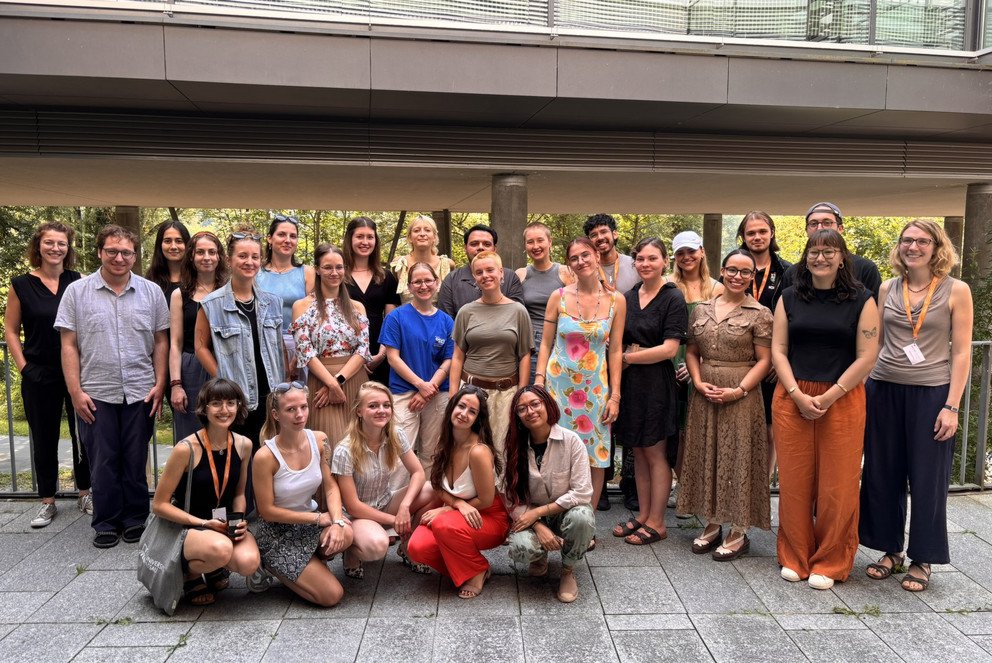
The fact that migration ethics must be considered from a global perspective was reflected not least in the international participants at this year’s Passau Summer School for Applied Ethics (PASSAE), which is organised and run annually by the Chair of Applied Ethics at the University of Passau under the direction of Prof. Dr Karoline Reinhardt. In 2026, students from Germany, Austria, Romania, the Czech Republic, Poland, Brazil, Benin, Lithuania, China, Pakistan, Hungary, Belgium, France, Italy, Serbia, Sweden, Spain, the USA, the UK, Taiwan, Morocco, Georgia, the Netherlands and Colombia took part in PASSAE.
The Summer School innovatively combines learning in thematic working groups with lectures by leading experts in applied ethics to create an international and interdisciplinary learning experience for students from all over the world: “We are delighted by the strong international appeal of our Summer School. It has once again become clear that young people, in particular, are interested in ethical issues and not just in feasibility,” emphasises Reinhardt.
This year, students in the ‘Future of Europe’, ‘Digitalisation’ and ‘Sustainability’ working groups examined European migration phenomena and the resulting questions for Europe’s future, the ethical implications of the digitalisation of border regimes, and the link between migration and sustainability, such as in the case of climate-induced displacement. In their respective groups, they each produced a joint blog article making their findings publicly available to a wide audience. In addition, during plenary lectures, participants had the opportunity to gain insights into the research of leading philosophical experts, to learn from them and to exchange ideas with them. The academic programme was complemented by various activities, such as an interactive city tour and a hike to the Veste Oberhaus, designed to help participants discover the campus and the city together and to encourage exchange amongst the international early-career researchers.
This year, for the first time, the five-day event concluded with a panel discussion followed by an informal discussion between participants in the Summer School and members of the University of Passau Alumni Club, during which the students were able to join the University of Passau’s international network so that they could remain connected to it even after the Summer School had ended.
PASSAE forms part of the University of Passau’s research focus on ‘Sustainable Change’. Researchers from various disciplines are working here to find answers to the pressing questions of climate change, social inequality and global responsibility.
The Summer School was funded by the Passau International Centre for Advanced Interdisciplinary Studies (PICAIS) and the Society for Analytical Philosophy (GAP).